Quantifying Cyber Risk with the FAIR Framework
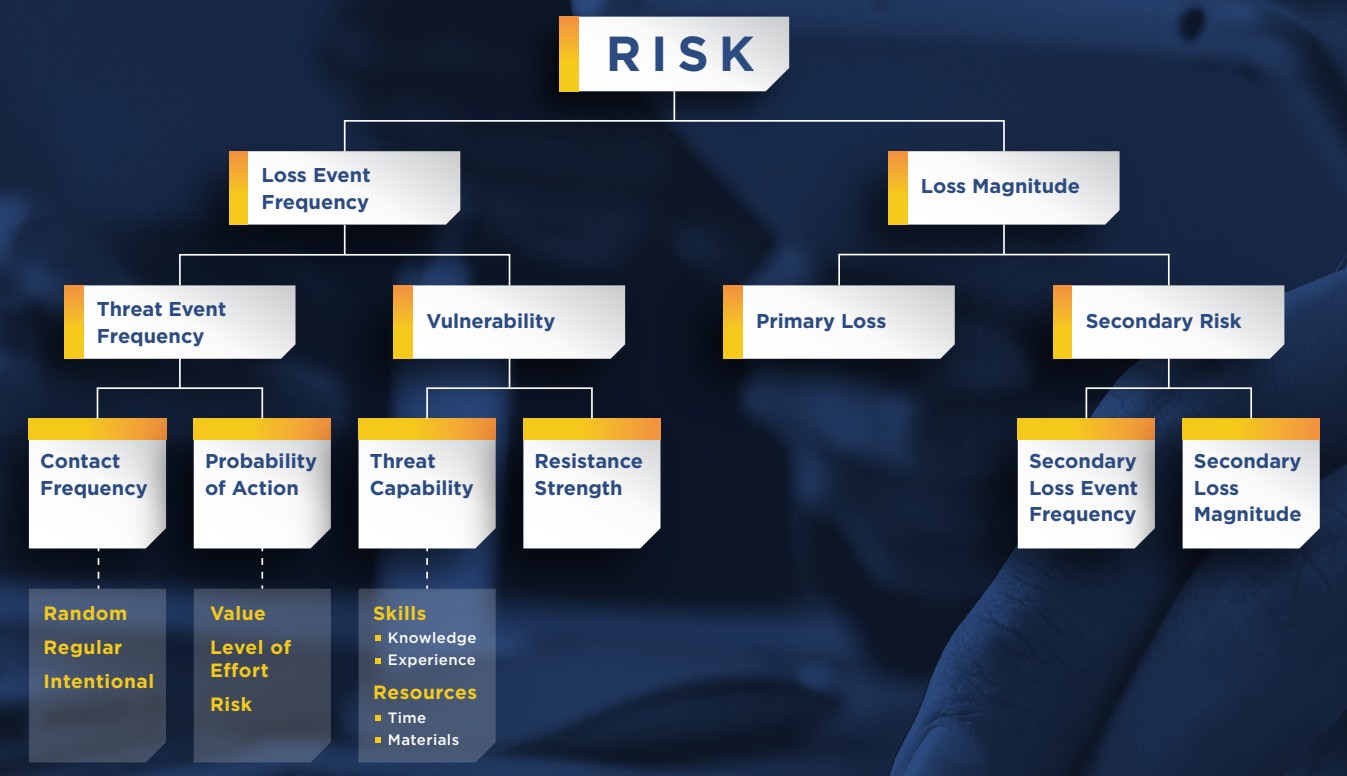
While traditional risk approaches describe risk qualitatively, the FAIR (Factor Analysis of Information Risk) framework enables organisations to measure cyber risk in financial and operational terms. FAIR breaks cyber risk down into clear components—threat event frequency, vulnerability, and probable loss magnitude—allowing decision-makers to understand how much risk exists and what it means to the business.
FAIR complements our assessment-driven approach by enabling risk-based prioritisation and investment optimisation. It helps organisations evaluate different control scenarios, understand how security investments reduce loss exposure, and identify the point where additional spend delivers diminishing returns. This ensures cyber security decisions are aligned with risk appetite, business objectives, and long-term resilience.
Figure: The FAIR model — breaking cyber risk into measurable and decision-ready components
Consulting Services
Strategy and Program Management
We support organisations in defining and managing cyber security strategies and programs that are aligned to business priorities and risk appetite. This includes establishing clear objectives, governance structures, roadmaps, and accountability to ensure initiatives deliver measurable outcomes.
Our program management approach ensures cyber security efforts remain coordinated, prioritised, and adaptable as risks, technologies, and regulatory expectations evolve. This enables sustained improvement rather than isolated or reactive security activities.
Business Case Development
We help organisations translate cyber risk into clear, compelling business cases that support informed investment decisions. By linking security initiatives to risk reduction, operational resilience, and regulatory drivers, we ensure proposals resonate with both technical and non-technical stakeholders.
Our business cases balance cost, benefit, and risk, enabling leadership to prioritise investments that deliver the greatest value. This supports transparent decision-making and avoids both under-investment and unnecessary overspend.
Board Reporting
Effective board oversight requires cyber security information that is clear, concise, and relevant. We design board-level reporting that focuses on risk, trends, and outcomes rather than technical detail.
Our approach enables boards and executives to understand current risk posture, emerging threats, and the effectiveness of controls. This strengthens governance, accountability, and confidence in cyber security decision-making.
Enterprise Security Architecture
We design enterprise security architectures that protect IT and OT environments while supporting operational requirements and future growth. This includes defining trust boundaries, segmentation, access models, and security controls aligned to recognised frameworks and best practices.
Our architectural guidance reduces systemic risk by addressing security at a design level rather than relying solely on point solutions. The result is a more resilient, maintainable, and defensible security posture.
Security Metrics and Dashboards
We establish meaningful security metrics that provide visibility into risk exposure, control effectiveness, and program maturity. Metrics are tailored to different audiences, from operational teams to executives and boards.
By presenting security data through clear dashboards, organisations gain ongoing insight into their cyber posture. This supports continuous improvement, informed prioritisation, and effective governance.
Risk Appetite and Success Criteria
Defining risk appetite is essential for consistent and defensible cyber security decisions. We help organisations articulate acceptable levels of risk across IT and OT environments in alignment with business objectives and regulatory expectations.
We also define success criteria to measure whether security initiatives are achieving their intended outcomes. This ensures cyber security is managed as a business risk, not just a technical issue.
Get In Touch